Was It Actually Cleaned?
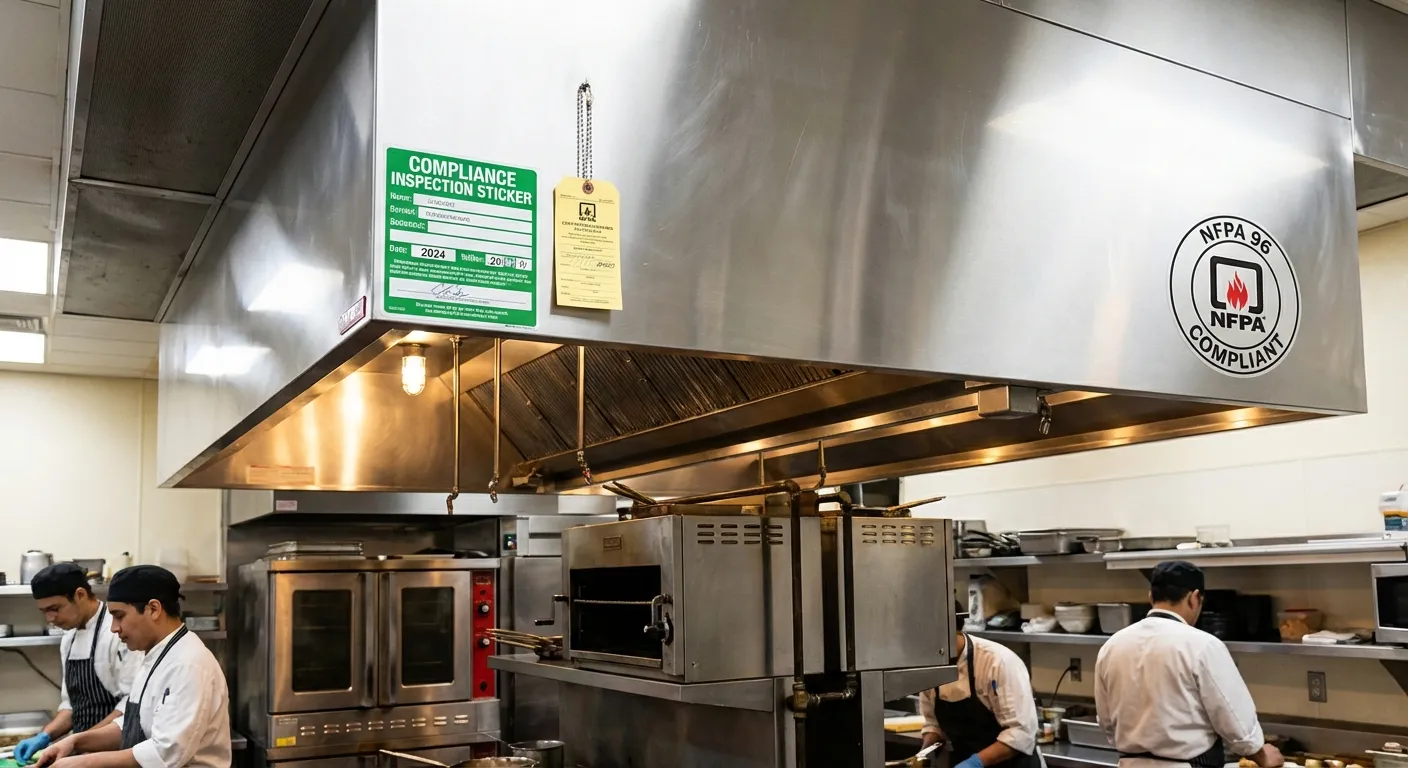
Not "did someone show up?" — was the system visibly cleaned in a way that matches what the sticker and paperwork claim?
NFPA 96 & FIRE CODE COMPLIANCE
Competitors talk about being "compliant." We focus on what that actually means for operators: cleaner exhaust systems, before-and-after photos, service stickers, useful notes, and documentation that stands up better when the fire marshal, health department, landlord, or insurance carrier starts asking questions.
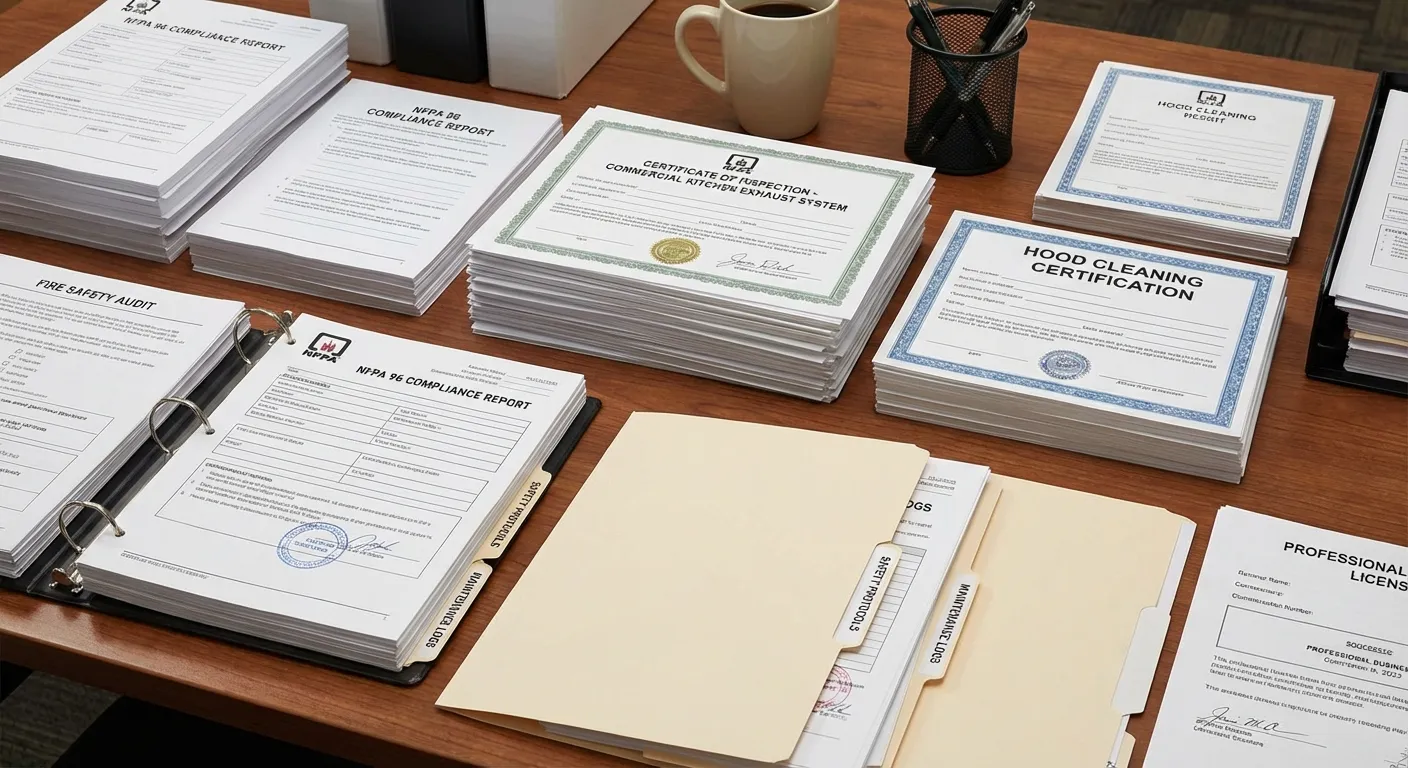
Compliance is not a magic phrase on a website. It is a combination of cleaning frequency, documented service, visible system condition, and whether your records make sense when somebody important asks to see them.
Grease-laden vapors accumulate in hoods, filters, ducts, and fans. Real compliance starts with actually reducing that load, not just talking about it.
Monthly, quarterly, semiannual, or annual intervals depend on fuel type, production volume, and grease output. Busy kitchens cannot safely pretend they are low-volume kitchens.
Not "did someone show up?" — was the system visibly cleaned in a way that matches what the sticker and paperwork claim?
Before-and-after photos, service dates, and written notes make life easier when memory gets fuzzy and staff changes happen.
A high-volume kitchen running aggressive grease load should not look like it has been maintained on a low-volume schedule.
Hinge, fan, access, and rooftop grease issues do not become less important because they were not written down last time.
If an inspection is coming, say that in the form. If the system is overdue, say that too. We'd rather scope the real compliance problem than guess.
Call (901) 479-0805 for immediate service.
Prefer phone? Call us at (901) 479-0805.